If you are not a Mauritian citizen and you want to own property here, the rules are clear, they are written down, and they work in your favour more than most people expect. What changed in 2026 is not the framework. It is the price of entry, and it changed twice in the space of three months.
Here is the complete, current position as it stands after the Finance Act 2026 was gazetted on 13 August 2026. Everything below reflects the law in force today, not the proposals that were floated and then dropped.
What a non-citizen can and cannot buy
The single rule that governs everything else: a non-citizen cannot simply buy any piece of Mauritian land or any house on the open market. Foreign ownership runs through government-approved frameworks administered by the Economic Development Board. Buy inside one of those frameworks and you own freehold title, with the same security a Mauritian owner has. Buy outside them and the transaction does not complete.
There is no grey area here and no workaround worth exploring. The schemes exist precisely so that foreign capital has a clean, legal, permanent route into Mauritian real estate.
The five routes into Mauritian property
PDS: the Property Development Scheme
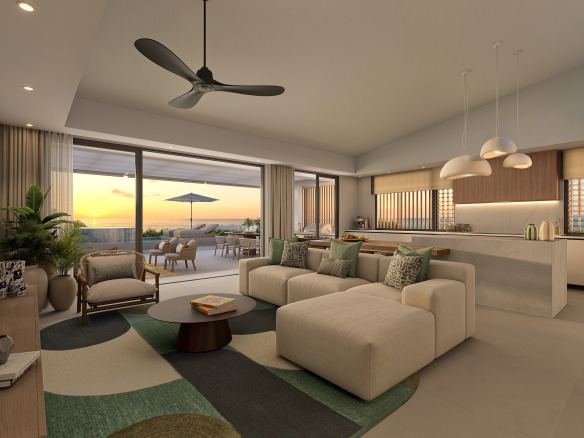
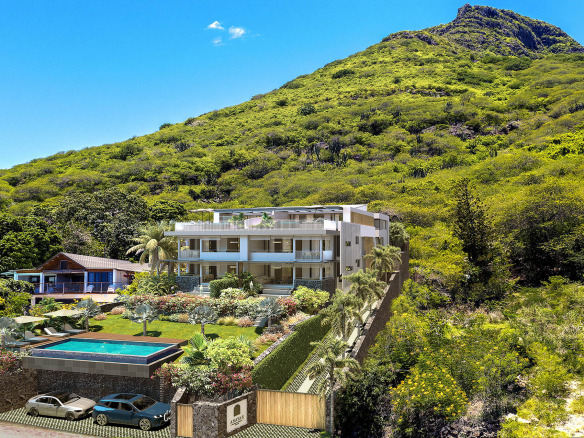
The workhorse of the market and the framework behind most new luxury developments built in the last decade. PDS projects are integrated residential estates, usually with a pool, a syndic, landscaped grounds and often a beach club or golf access. There is no minimum purchase price under PDS itself, though the USD 375,000 residence threshold shapes what most foreign buyers choose. PDS is where you will find the majority of the villas and apartments on our books.
IRS and RES: the originals
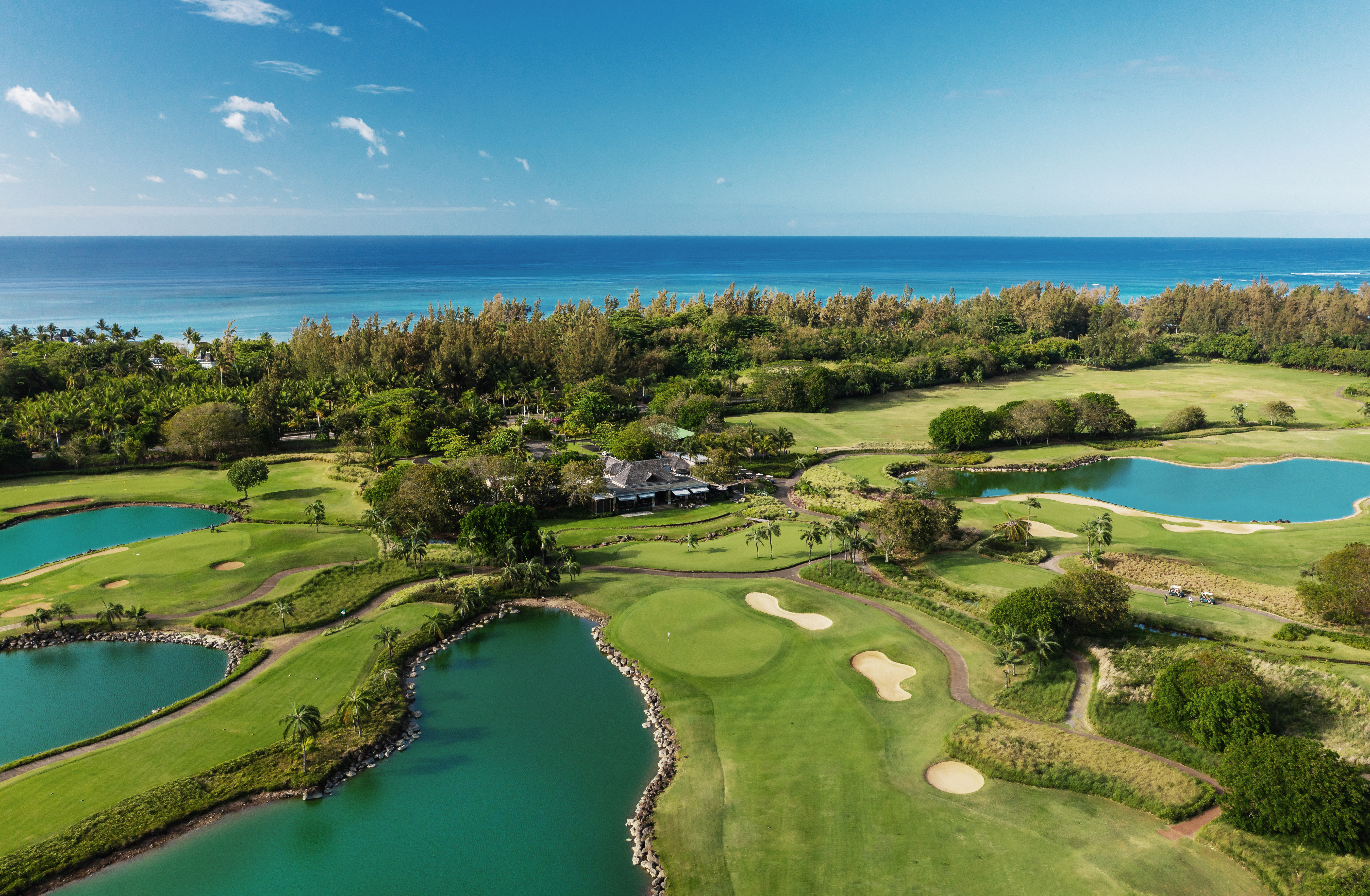
The Integrated Resort Scheme and the Real Estate Scheme predate PDS and are no longer issued for new projects, but a substantial resale market exists in both. IRS estates are the large, resort-anchored developments, typically on generous plots with golf and marina infrastructure. RES projects are smaller and more intimate. If you are buying an established property with mature gardens and a settled community, there is a good chance it sits under IRS or RES title.
Smart City Scheme
The most ambitious of the frameworks. Smart Cities are mixed-use districts combining residential, office, retail, education and healthcare in a single masterplan, built to work as functioning towns rather than holiday enclaves. For a buyer who intends to live here year round, run a business here, or put children into school here, a Smart City address changes the daily experience of the island considerably.
Ground+2 apartments
The most accessible entry point. A non-citizen may buy an apartment in a building of at least 2 floors above ground level, with a minimum purchase price of MUR 6 million. G+2 is how a great many foreign buyers make their first Mauritian acquisition, and it is the route most often used by buyers who want a rental asset rather than a residence.
A note on land
Bare land is a different matter. Non-citizens acquire serviced plots within approved scheme developments, and build to the estate’s architectural code. Buying agricultural or unzoned land as a foreign individual is not a route that exists.
USD 375,000: the number that turns a purchase into a life
This is the provision that separates Mauritius from almost every comparable destination. Acquire a qualifying residential property valued at USD 375,000 or more under an approved scheme, and you become eligible for a residence permit that remains valid for as long as you own the property. Not a renewable visa reviewed every few years. A residence entitlement tied to your title deed.
The permit extends to your spouse and to your children under the age of 24. It leaves you free to invest and do business in Mauritius. And where a property is bought jointly, each investor contributing at least USD 375,000 in their own right qualifies independently.
What it is not is citizenship. Permanent residence and a Mauritian passport are separate things with separate processes, and anyone telling you a property purchase delivers the latter is misinforming you.
What you actually pay in 2026
Registration duty: 5%, after a scare
The Finance Act 2025 legislated a rise in registration duty and land transfer tax on scheme property from 5% to 10%, due to take effect on 1 July 2026. For a market built on foreign investment, that was a serious jump, and it froze a number of transactions through the first half of the year.
It did not happen. The Finance Act 2026 repealed the increase before it ever settled in. Registration duty payable by the buyer on a non-citizen EDB scheme acquisition stands at 5%. Land transfer tax payable by the seller stands at 5%. If you paused a purchase in early 2026 waiting for clarity, the wait is over and the outcome went your way. We covered the reversal in detail in Registration Fees in Mauritius.
The one new charge you need to know about
The Finance Act 2026 did introduce something new, and it is narrow but expensive where it applies. An additional duty of 10% now falls on the transfer of residential property situated on State land or on Pas Géométriques to a non-citizen. It is payable by the seller. Notarial reservation agreements and promises of sale signed before 19 June 2026 are protected from it.
Most scheme property is freehold and unaffected. But a meaningful slice of Mauritian coastal property, particularly certain beachfront and marina holdings, sits on Pas Géométriques leasehold. If you are buying beachfront, establish the land tenure before you sign anything. It is a question your notary answers in an afternoon and it materially changes the seller’s economics, which means it changes your negotiation.
The rest of the acquisition cost
- Registration duty: 5% of the purchase price, paid by the buyer at deed.
- Notary fees: typically 1% to 2%, on a regulated scale.
- Inward remittance and conversion costs: usually 0.1% to 0.3%, depending on your bank and the corridor.
- Syndic and maintenance charges: ongoing, and they vary enormously between a serviced beachfront estate and a modest apartment block. Ask for 3 years of actual figures, not the projection in the brochure.
- Agency commission: on new developments this is built into the launch price rather than added to it.
Budget 7% to 8% over the headline price for a straightforward scheme purchase, and you will not be surprised at the notary’s office. Our full breakdown sits in the cost of buying property in Mauritius.
Financing as a non-resident
Mauritian banks lend to foreign buyers, generally up to 70% of the property’s value. The conditions matter as much as the ratio. Funds must arrive in foreign currency and be converted locally, and a substantial share of the price must be funded from your own transferred capital rather than borrowed. Rates and terms vary between the main banks, and the difference across a 20 year facility is not trivial, so it is worth having more than one conversation.
Off-plan purchases follow a staged payment schedule tied to construction milestones, secured by a bank guarantee of completion. Confirm that guarantee exists and read what it actually covers.
The tax picture, and why it is the real argument
The acquisition costs above are ordinary. What is not ordinary is what happens afterwards.
- No capital gains tax on individually held real estate. A capital gains tax was floated in the 2025 Budget Speech and never enacted. When you sell, your gain is yours.
- No inheritance tax and no wealth tax.
- No annual property tax.
- No exit tax.
- Foreign-source income is taxed only when remitted to Mauritius.
Personal income tax is progressive, and it changed on 1 July 2026. The first MUR 500,000 of chargeable income is taxed at 0%. The next MUR 500,000 at 10%. The next MUR 11 million at 20%. Chargeable income above MUR 12 million is taxed at 35%, a new top band that replaced the Fair Share Contribution introduced the previous year.
If you have read that Mauritius has a flat 15% income tax, that information is several years out of date. The flat rate ended on 1 July 2023.
Routes in that do not involve property
Property is the most common path to Mauritian residence, but it is not the only one, and the 2026 reforms reshaped the alternatives.
The Occupation Permit now opens at USD 100,000 for the investor and self-employed routes, with renewal linked to defined turnover milestones in the third and fifth years of trading. The professional route requires a minimum monthly basic salary of MUR 50,000. The former ProPass and Expert Pass categories were discontinued and folded into the main framework.
The Golden Visa, introduced in the 2026 to 2027 Budget, offers a route to permanent residence for investors placing a minimum of USD 1 million into targeted sectors: FinTech, global treasury, artificial intelligence, biotechnology and renewable energy. Residential property bought under an EDB scheme does not count towards that USD 1 million. The two routes sit alongside each other, and for a number of the families we advise they work well in combination.
Selling again
Scheme properties are freehold and can be resold to Mauritian citizens and to non-citizens alike, subject to EDB clearance. That clearance is a process rather than an obstacle, but it takes time and it has document requirements that catch unprepared sellers. The exit route being open and well trodden is a large part of why the market holds its value, and it is one of the first things a serious investor should confirm before buying into any development.
What this adds up to
Freehold title. A residence permit for your family that lasts as long as you own the home. Local financing at up to 70%. No tax on your eventual gain, no inheritance tax, no wealth tax, no annual property tax. And after a year of uncertainty, an acquisition cost that came in at half what buyers were bracing for.
There are very few jurisdictions that offer that combination, and fewer still with a functioning legal system, English and French as working languages, and 4 hours of flying time to Dubai.
Frequently asked questions
Can a foreigner buy property in Mauritius in 2026?
Yes. A non-citizen can acquire freehold residential property through approved Economic Development Board frameworks: the Property Development Scheme, IRS, RES, the Smart City Scheme, and Ground+2 apartments with a minimum price of MUR 6 million. Buying outside these frameworks is not permitted.
How much is registration duty in Mauritius in 2026?
Registration duty on a non-citizen acquisition under an EDB scheme is 5% of the purchase price, paid by the buyer. The increase to 10% legislated by the Finance Act 2025 was repealed by the Finance Act 2026 before it took effect. Land transfer tax payable by the seller is also 5%.
Does buying property in Mauritius give you residency?
Acquiring a qualifying residential property valued at USD 375,000 or more under an approved scheme makes a non-citizen eligible for a residence permit valid for as long as they own the property. It extends to a spouse and to children under 24. It is a residence permit, not citizenship.
Is there capital gains tax on property in Mauritius?
No. Mauritius does not levy capital gains tax on individually held real estate. There is also no inheritance tax, no wealth tax, no annual property tax and no exit tax. A capital gains tax was proposed in the 2025 Budget Speech but was never enacted.
Can a non-resident get a mortgage in Mauritius?
Yes. Mauritian banks generally lend foreign buyers up to 70% of a property’s value. Funds must arrive in foreign currency and be converted locally, and a substantial share of the purchase price must come from the buyer’s own transferred capital.
What is the 10% duty on State land and Pas Géométriques?
The Finance Act 2026 introduced an additional 10% duty on the transfer of residential property situated on State land or Pas Géométriques to a non-citizen, payable by the seller. Reservation agreements and promises of sale signed before 19 June 2026 are exempt. Most freehold scheme property is unaffected, but the land tenure should always be confirmed before signing, particularly on beachfront.
Speak to someone who does this every week
Rules on a page are the easy part. The value sits in knowing which developments hold their price, which syndic charges are quietly rising, which land is Pas Géométriques, and which notary will actually answer the phone in August.
LIVERIA International Realty advises international buyers through every stage of acquiring in Mauritius, from scheme selection to EDB clearance to keys. For a personalised cost breakdown on a specific property or scheme, or a straight answer on whether a purchase qualifies you for residence, contact our team at [email protected].