Mauritius is 65 km long. You can drive from the northern tip to the southern coast in under 2 hours. And yet the island contains four property markets that behave so differently they might as well be separate countries.
Buyers who get this right buy in the region that matches how they will actually use the property. Buyers who get it wrong buy the view in the brochure and spend the next 3 years driving.
This is the honest area guide: what each coast is genuinely like, what it costs in 2026, who it suits, and where the investment case is strongest. The price ranges quoted are drawn from live inventory on our own books as at September 2026.
The North: the busiest market, and the easiest to live in
Indicative range: EUR 190,000 to EUR 3,100,000. Median around EUR 850,000.
Key areas: Grand Baie, Mont Choisy, Pereybere, Trou aux Biches, Balaclava, Cap Malheureux, Grand Gaube.
What it is actually like
The North is where the island stops feeling remote. Grand Baie has restaurants that stay open, a supermarket that stocks what you expect, international schools within reach, clinics, a marina, and a social life that does not require an invitation. For a family relocating from Europe or the Gulf, it is the softest landing on the island.
Mont Choisy has become the North’s centre of gravity for new luxury development, anchored on the golf estate and the beach. Pereybere is quieter and more residential, with a genuine village feel and a beach locals still use. Trou aux Biches and Balaclava run west along the coast into resort territory, where the 5-star hotels and their serviced residences sit. Cap Malheureux and Grand Gaube, at the top of the island, are where you go when you want the North’s amenities 15 minutes away rather than outside your gate.
The investment case
The strongest rental market on the island, and it is not close. The North has the deepest pool of long-term expatriate tenants, the highest short-let occupancy, and the shortest void periods. If your purchase needs to earn while you are not in it, this is the default answer. It is also the most liquid resale market, which matters more than most buyers appreciate until they want to sell.
The trade-off is that you are buying into the most competitive market on the island. Grand Baie in high season is busy, and beachfront supply is genuinely finite.
Buy here if: you want convenience, rental income, and the widest choice of stock.
The West: the highest ceiling, and the mountain
Indicative range: EUR 285,000 to EUR 5,350,000. Median around EUR 1,180,000.
Key areas: Black River, Tamarin, Wolmar, Flic en Flac, Bel Ombre approaches.
What it is actually like
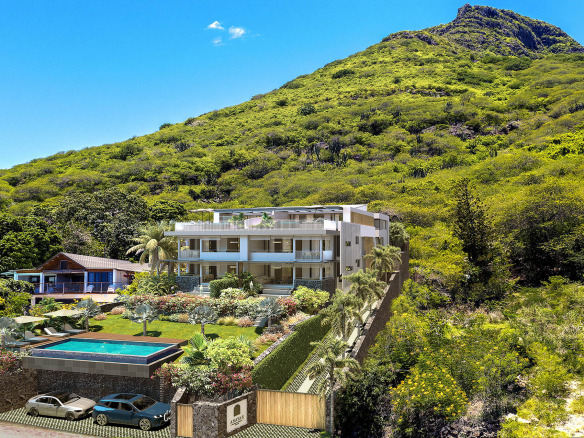
The West has the drama. Le Morne and the Black River gorges rise behind the coast, the sunsets face you rather than your neighbour, and the lagoon at Tamarin brings dolphins into the bay most mornings. It is the coast that photographs best and, for a certain kind of buyer, the coast that decides the purchase in an afternoon.
Black River is the established prime address, with the deepest concentration of large villas and the highest prices on the island. Tamarin has an easy, surf-town character that has quietly matured into serious money. Flic en Flac is the West’s accessible end, with apartments at entry prices and a long public beach. Wolmar sits between them, resort-flanked and calm.
The West is also the driest and sunniest part of the island, which is a real consideration in the January to March cyclone season.
The investment case
The West holds the top end. If you are buying above EUR 2 million, this is where the comparable stock is, and where a trophy asset is most defensible on resale. Rental demand is strong but seasonal, skewed towards high-value short lets rather than year-round tenancies. It is a market that rewards patience and quality over yield optimisation.
Buy here if: you want scenery, space, and the strongest ceiling on capital value.
The East: the quiet money
Indicative range: EUR 500,000 to EUR 6,600,000. Median around EUR 1,000,000.
Key areas: Beau Champ, Belle Mare, Pointe de Flacq, Poste Lafayette, Roches Noires.
What it is actually like
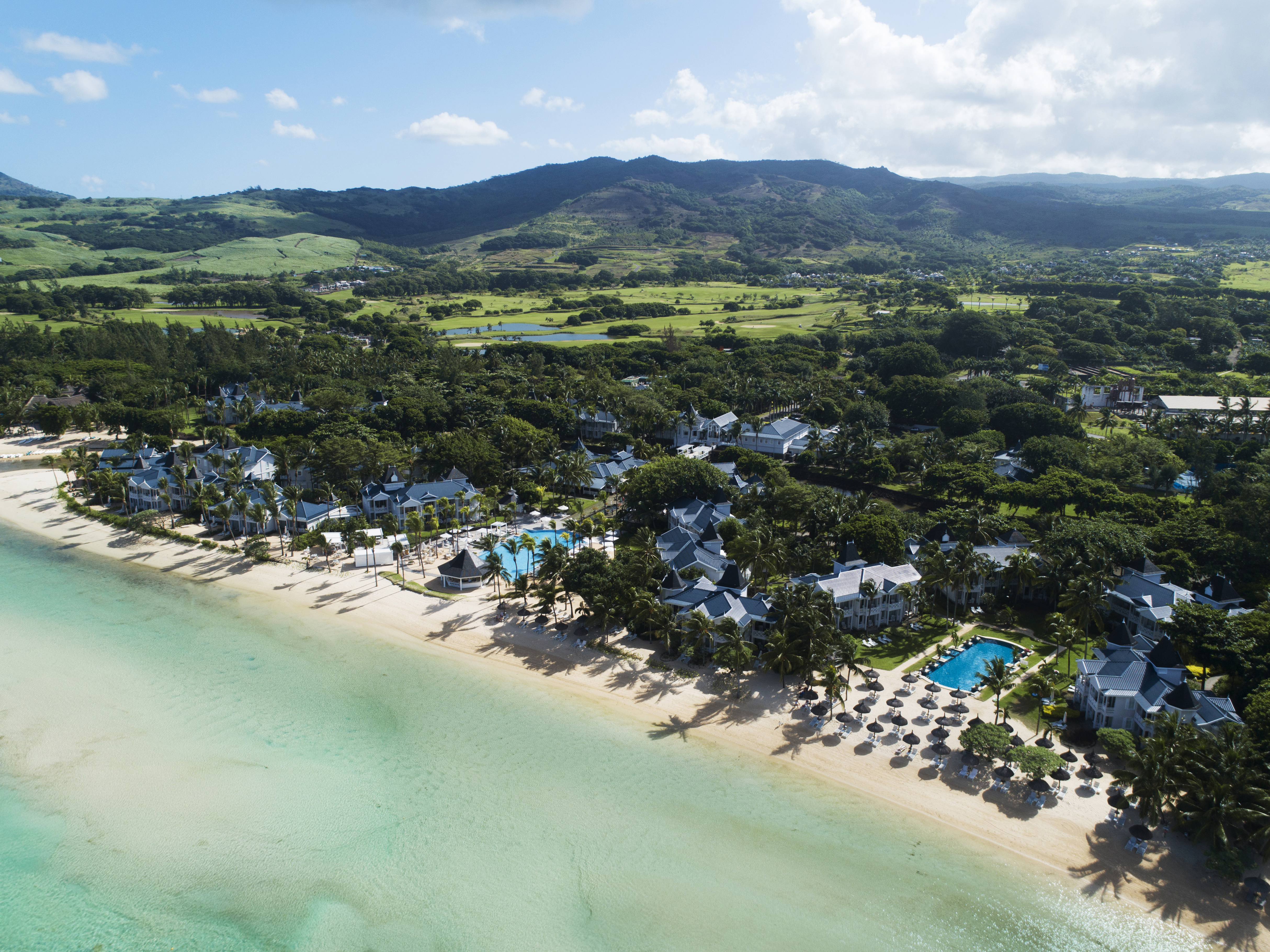
The East is where the island keeps its best beaches and says nothing about it. Belle Mare’s sand is the finest in Mauritius. Beau Champ, anchored on the Four Seasons at Anahita, is a golf and lagoon estate of a quality that would command double elsewhere in the Indian Ocean. Pointe de Flacq holds some of the largest private waterfront holdings on the island.
What the East does not have is bustle. There is no Grand Baie here. Dinner is at the estate, at a hotel, or at home. For some buyers that is the entire point. For others it becomes a 40 minute drive they had not budgeted for.
The trade wind is the other thing nobody mentions in the brochure. It blows steadily on this coast, which is glorious in February and noticeable in July.
The investment case
The East offers the best quality per euro on the island for a buyer who is not buying for convenience. A villa on a championship golf estate with lagoon frontage costs materially less here than an equivalent address in the West. Resale is slower and the buyer pool is narrower, so this is a hold rather than a trade. Branded residence schemes with hotel rental pools are concentrated here and can work well for owners who want managed income without managing anything.
Buy here if: you want privacy, beach quality, and value at the top end, and you will fly in rather than pop out.
The South: the last unspoiled coast
Indicative range: EUR 1,090,000 to EUR 1,580,000 on current stock.
Key areas: Bel Ombre, Baie du Cap, Souillac.
What it is actually like
The South is green, dramatic, and thinly built. Bel Ombre is the exception and the anchor: a heritage estate with golf, hotels, a nature reserve and a small, carefully controlled residential component. Beyond it the coast turns wild, with cliffs rather than lagoon in places, and villages that have not changed much.
Supply is genuinely scarce here. That is the appeal and the constraint.
The investment case
Scarcity plus a protected landscape is a durable combination. The South has less to lose from overdevelopment than any other coast because there is very little land available to develop. Rental demand is thinner and more seasonal, so buy here for the asset and the life, not for the yield. For a buyer with a 10 year horizon it is the most interesting speculative position on the island.
Buy here if: you want nature, seclusion, and a supply-constrained position you intend to hold.
The Centre: the one investors keep overlooking
Indicative range: EUR 135,000 to EUR 360,000 on current stock.
Key areas: Moka, Montebello, Ébène, Beau Plan.
What it is actually like
No beach, and that is the point. The Centre is where Mauritius actually works: the business districts, the universities, the international schools, the hospitals, the Smart Cities. It sits 300 m above sea level, so it is several degrees cooler and considerably greener than the coast, with the Moka mountain range as the backdrop.
For a family relocating with school-age children and a business to run, the Centre removes an hour of driving from every single day.
The investment case
This is where the yields are. Entry prices are a fraction of coastal equivalents, and the tenant base is the most reliable on the island: professionals on occupation permits, academics, corporate secondments, families anchored to a school year. Void periods are short and the tenancies are long. Smart City development in the Centre is also the most active on the island, which supports the medium-term capital story.
If you are building a Mauritian rental portfolio rather than buying a holiday home, the Centre deserves a serious look before the coast does.
Buy here if: you want yield, year-round tenants, schools and business infrastructure.
Choosing between them
Strip away the photography and the decision usually comes down to three questions.
- How many weeks a year will you actually be here? Under 8, and rental performance should drive the choice, which points North or Centre. Over 20, and daily convenience matters more than yield.
- Are there children in school? If yes, the honest shortlist is the North or the Centre. Everything else involves a drive you will come to resent.
- Is this a home or a position? A home can justify the East or the South. A position that needs liquidity in 5 years should be in the North or the West.
One further point worth making plainly: whichever region you choose, a non-citizen buys through an approved Economic Development Board scheme, and the acquisition rules are the same island-wide. Registration duty stands at 5% after the increase legislated for 2026 was repealed, and a qualifying purchase of USD 375,000 or more carries a residence permit for as long as you own the property. Region changes the lifestyle and the yield. It does not change the legal route in. The full framework is set out in our guide to registration fees and the 2026 duty reversal.
Frequently asked questions
Which is the best area to buy property in Mauritius?
There is no single best area, but there is a best area for each purpose. The North, around Grand Baie and Mont Choisy, offers the strongest rental market and the most amenities. The West, around Black River and Tamarin, holds the highest-value stock and the best scenery. The East offers the best beaches and the most quality per euro. The South is the most supply-constrained. The Centre, around Moka, delivers the strongest rental yields and year-round tenants.
Where do most foreigners buy property in Mauritius?
The North is the most popular region with international buyers, particularly Grand Baie, Mont Choisy, Pereybere and Trou aux Biches. It has the deepest supply of scheme property, the widest range of price points, and the shortest adjustment period for families moving from Europe or the Gulf.
Which region of Mauritius has the best rental yields?
The Centre, around Moka and Ébène, generally produces the strongest yields because entry prices are well below coastal equivalents while tenant demand from professionals, academics and relocating families runs year round. For short-let income rather than yield, the North performs best on occupancy.
How much does property cost in Mauritius in 2026?
Across current LIVERIA inventory, apartments in the Centre start around EUR 135,000, coastal apartments in the North from roughly EUR 190,000, and villas from around EUR 500,000. Prime villas in the West and East run from EUR 1 million to over EUR 6 million. Budget 7% to 8% above the purchase price for registration duty, notary fees and transfer costs.
Is the North or the West of Mauritius better?
The North is better for convenience, rental income and resale liquidity. The West is better for scenery, larger properties and top-end capital value. Families and investors tend towards the North, while buyers of large villas and second homes above EUR 2 million tend towards the West.
See the regions properly before you choose one
Almost every buyer who has regretted a Mauritian purchase chose the region from a website. Almost every buyer who is happy chose it after three days of driving with someone who knew which estates have rising syndic charges and which beach is unusable at low tide.
LIVERIA International Realty holds mandates across all five regions, including off-market stock that never reaches a portal. Tell us how you intend to use the property and we will tell you honestly which coast fits, including when the answer is not the one you had in mind. Reach us at [email protected].