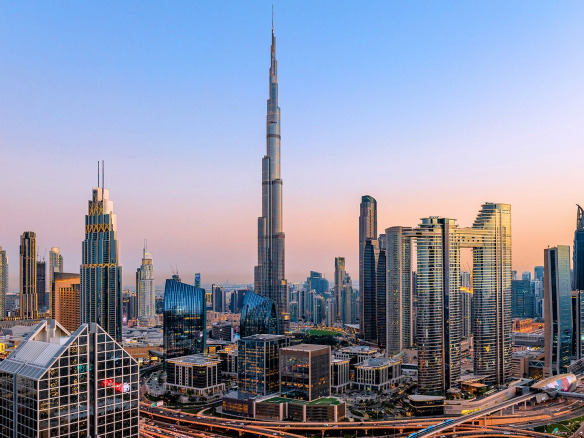
Is it safe to invest in Dubai property? Legally, yes: Dubai offers some of the strongest buyer protections of any emerging property market, with off-plan payments held in escrow, every sale registered with the Dubai Land Department, and full freehold ownership for foreigners in designated areas. The risks in 2026 are market and geopolitical, not legal. Prices were 3.1% lower year on year in August 2026 on the ValuStrat index, heavy new supply is arriving, and the regional conflict that began in February 2026 showed that the UAE is not insulated from its neighbourhood.
So the honest answer has 2 parts. The system protects your title and your money far better than it did 15 years ago. It does not protect you from buying the wrong property, at the wrong price, at the wrong point in the cycle. This guide covers both, for Dubai and for Abu Dhabi, and ends with a due diligence checklist. It replaces our earlier articles on UAE property safety. This guide was updated on 18 September 2026.
Is it safe to invest in Dubai property: key facts
- Escrow: under Dubai Law No. 8 of 2007, off-plan payments go into a project escrow account that can only fund construction and cannot be seized by the developer’s creditors.
- Registration: off-plan purchases are recorded in the interim register (Oqood), and completed sales are registered with the Dubai Land Department, which issues the title deed.
- Freehold: foreigners can own property outright in designated freehold areas of Dubai and investment zones of Abu Dhabi.
- Costs: a 4% Dubai Land Department transfer fee in Dubai, and a 2% registration fee in Abu Dhabi.
- Tax: no personal income tax on rent and no capital gains tax for individual owners.
- Residency: property worth AED 2 million or more qualifies for a 10-year renewable Golden Visa.
- Market: Dubai recorded AED 917 billion of real estate transactions in 2025, a record, and AED 252 billion in Q1 2026. Prices have since eased.
- Geopolitics: Iran launched missile and drone attacks on the UAE from 28 February 2026. A ceasefire followed on 8 April 2026, and the UAE lifted all air traffic restrictions on 3 May 2026.
How does the law protect property buyers in Dubai?
Escrow accounts for off-plan property
The most important protection for off-plan buyers is the escrow system. A developer must register the project and open a dedicated escrow account with an approved bank before selling off-plan. Your payments go into that account, not to the developer, and can only be released for construction of that specific project. Each project needs its own account, so money cannot be moved between developments. After completion, the escrow agent retains 5% of the account for 1 year after the units are registered, as a buffer for defects.
Oqood and the interim register
Off-plan sales are recorded in Dubai’s interim real estate register, known as Oqood. Your purchase is registered in your name while the building is under construction, which prevents the same unit from being sold twice and gives you a documented right that can be resold or inherited.
Title deeds and the Dubai Land Department
On completion, the Dubai Land Department (DLD) registers the transfer and issues a title deed in your name. The DLD and its regulatory arm, the Real Estate Regulatory Agency (RERA), license brokers and developers, approve service charges and oversee escrow. Every transaction is recorded centrally, which is why Dubai publishes some of the most complete transaction data of any property market.
Freehold ownership for foreigners
Foreign buyers can own freehold property, land and building, in designated areas such as Downtown Dubai, Dubai Marina, Palm Jumeirah and Business Bay. Outside those areas foreigners are limited to leasehold or usufruct rights. Check that any property you consider sits in a freehold area.
Is Abu Dhabi as safe as Dubai for property buyers?
Abu Dhabi has a comparable framework. The Abu Dhabi Real Estate Centre (ADREC) regulates the sector under Law No. 3 of 2015, projects are registered on the official Dari platform, and off-plan payments go into escrow accounts managed by approved banks, released only in line with construction milestones. The public can check a project’s completion rate and escrow account number on Dari. Foreigners can own property in designated investment zones such as Saadiyat Island, Yas Island and Al Reem Island. The registration fee is 2%, half of Dubai’s. Our comparison of Abu Dhabi and Dubai off-plan and population trends sets out the differences in demand.
What are the real risks of investing in Dubai property in 2026?
Legal protection does not remove market risk. These are the risks we discuss with every client.
1. The property cycle
Dubai residential prices rose steeply between 2022 and early 2025. Fitch Ratings forecast a correction of around 15% from the second half of 2025 through 2026, as new supply outpaced population growth. The market has now turned. In August 2026 the ValuStrat index was 3.1% lower year on year, with apartments down 5.3% and villas down 1.7%.
2. Supply
Fitch estimated an average 16% increase in housing supply over 2025 to 2027, against forecast population growth of around 5%. Much of this supply is apartments in master communities, which is where price pressure is likely to be greatest. Prime, scarce locations have historically held up better.
3. Off-plan completion and resale risk
Escrow protects your payments, but not your returns. Delays, over-optimistic launch prices and a crowded resale market can all hurt. In August 2026, off-plan registrations were 40.4% lower than a year earlier. Buyers who planned to sell before completion may find fewer buyers than expected.
4. Rental yields
Rents rose sharply in 2023 and 2024, but Property Finder data showed Dubai rents falling 6.7% between early 2026 and April 2026, with larger falls in some prime districts. Gross yields remain higher than in most global cities, but do not assume the peak rents of 2024 when you model a purchase. Our guide to how much money you need to invest in Dubai covers entry costs.
How does the 2026 Iran conflict affect UAE property safety?
This is the question every investor asks in 2026, and it deserves a straight answer.
From 28 February 2026, following US and Israeli strikes on Iran, Iran fired missiles and drones at the UAE. The UAE’s air defences intercepted the large majority, but there were casualties and damage to infrastructure, including at Dubai International Airport. Airspace was partially closed, schools moved online and transactions fell sharply in March. A Pakistan-brokered ceasefire between the United States and Iran took effect on 8 April 2026, and the UAE lifted all air traffic restrictions on 3 May 2026.
What it showed:
- The system worked. Title deeds, escrow accounts, banks and the Dubai Land Department operated throughout. Nobody lost legal ownership of a property because of the conflict.
- Sentiment is fragile. Prices eased and transactions slowed, particularly off-plan. Some buyers, especially those buying on leverage or planning quick resales, were exposed.
- Risk is now priced in. The idea that the UAE is untouched by regional events has gone. For long-term buyers, that realism is healthier than the exuberance of 2024.
The ceasefire has held so far, but the region remains tense and a renewed conflict cannot be ruled out. We analyse the scenarios in how the Iran conflict could impact the UAE real estate market.
Why do investors still consider the UAE a secure place to hold property?
- Currency: the dirham has been pegged to the US dollar since 1997, which removes currency risk for dollar-based investors.
- Tax: no personal income tax, no capital gains tax and no annual property tax for individual owners.
- Transparency: central registration, published transaction data and regulated brokers.
- Compliance: the Financial Action Task Force removed the UAE from its grey list in February 2024, and buyers now go through standard anti-money laundering checks.
- Residency: the 10-year Golden Visa for property owners of AED 2 million or more.
- Depth: 2025 was a record year, with AED 917 billion of transactions, so there is a liquid market when you want to sell.
Risks and protections at a glance
| Risk | Protection in place | What you should do |
|---|---|---|
| Developer takes the money and does not build | Escrow account, funds released only for construction | Pay only into the project escrow account |
| Unit sold twice or title disputed | Oqood registration and DLD title deeds | Check registration in your name |
| Unlicensed broker | DLD and RERA broker licensing | Ask for the broker’s registration card |
| Price correction | None | Buy at a fair price, hold for 5 years or more |
| Oversupply nearby | None | Check the pipeline in the district |
| Regional conflict | None | Keep leverage low and plan for volatility |
How to reduce risk: a due diligence checklist
- Verify the developer and the project with the Dubai Land Department (the Dubai REST app shows registered projects), or on Dari in Abu Dhabi.
- Get the escrow account details from the sale agreement and pay nothing into any other account.
- Register the purchase in Oqood for off-plan, or check the title deed before transfer on a ready unit.
- Check the broker’s licence and ask for a written agreement on fees.
- Compare prices with recent registered sales in the same building, not with launch prices.
- Read the sale agreement for delay clauses, payment milestones and handover conditions.
- Check service charges and their history before you commit.
- Keep leverage prudent so a price dip or a vacancy does not force a sale.
- Plan your exit and a holding period of at least 5 years.
Our guide to what defines a successful off-plan investment in the UAE goes further on developer due diligence, and our branded residences guide covers the prime end of the market.
Frequently asked questions
Is it safe to invest in Dubai property in 2026?
Legally, yes. Off-plan payments are held in escrow, sales are registered with the Dubai Land Department, and foreigners own freehold in designated areas. The risks are market and geopolitical: prices were 3.1% lower year on year in August 2026 and more supply is arriving. Buy at a fair price, keep leverage prudent and plan to hold for at least 5 years.
Did the Iran conflict make UAE property unsafe?
It did not affect legal ownership. Title deeds, escrow accounts and registrations were unaffected, and the ceasefire of 8 April 2026 has held so far. It did hit sentiment: transactions fell sharply in March 2026 and prices eased. Long-term buyers with moderate leverage were far less exposed than those relying on quick resales.
How are off-plan buyers protected in Dubai?
Under Dubai Law No. 8 of 2007, developers must register each project and open a dedicated escrow account before selling off-plan. Buyer payments go into that account and can only be used to build that project. Purchases are registered in the Oqood interim register, and 5% of the escrow is retained for 1 year after completion.
Can foreigners own property in Dubai and Abu Dhabi?
Yes. Foreigners can own freehold property, including the land, in designated freehold areas of Dubai such as Downtown, Dubai Marina and Palm Jumeirah, and in Abu Dhabi’s investment zones such as Saadiyat, Yas and Al Reem Island. Outside these areas, foreign ownership is limited to leasehold or usufruct rights.
Will Dubai property prices fall further?
Nobody can say for certain. Fitch Ratings had forecast a correction of around 15% through 2026 because supply is growing faster than the population, and the ValuStrat index was down 3.1% year on year in August 2026. Prime and scarce locations have historically held up better than mass-market apartments in new communities.
Does buying property in Dubai give residency?
Yes. Property worth AED 2 million or more qualifies the owner for a 10-year renewable Golden Visa, which can include a spouse, children and parents. Mortgaged property can qualify if at least AED 2 million has been paid. Smaller purchases can support a shorter investor residence visa, subject to current rules.
Invest in the UAE with clear eyes
The UAE’s legal framework makes it among the safer places in the world to hold property. The market is not risk-free, and 2026 has made that plain. The investors who do well are those who buy carefully, pay fair prices and can afford to wait.
LIVERIA International Realty is a Mauritius-based luxury real estate agency with a presence in Dubai and London, recognised by the Luxury Lifestyle Awards in 2024 and 2026 and by the Global Elite Awards in 2025 and 2026, which named LIVERIA among the Top 100 Companies Worldwide in both years. We advise buyers in Dubai and the wider UAE through LIVERIA Prime Real Estate LLC, with independent due diligence on developers, pricing and exit, and access to off-market properties that are not publicly listed. Reach us at [email protected].
Sources
- Dubai Law No. 8 of 2007 concerning escrow accounts for real estate development%20of%202007.html)
- Dubai Land Department, Q1 2026 real estate transactions
- Abu Dhabi Real Estate Centre, FAQs
- Khaleej Times, Dubai property market in August 2026 (ValuStrat data)
- Al Jazeera, UAE lifts all air traffic restrictions introduced since Iran war