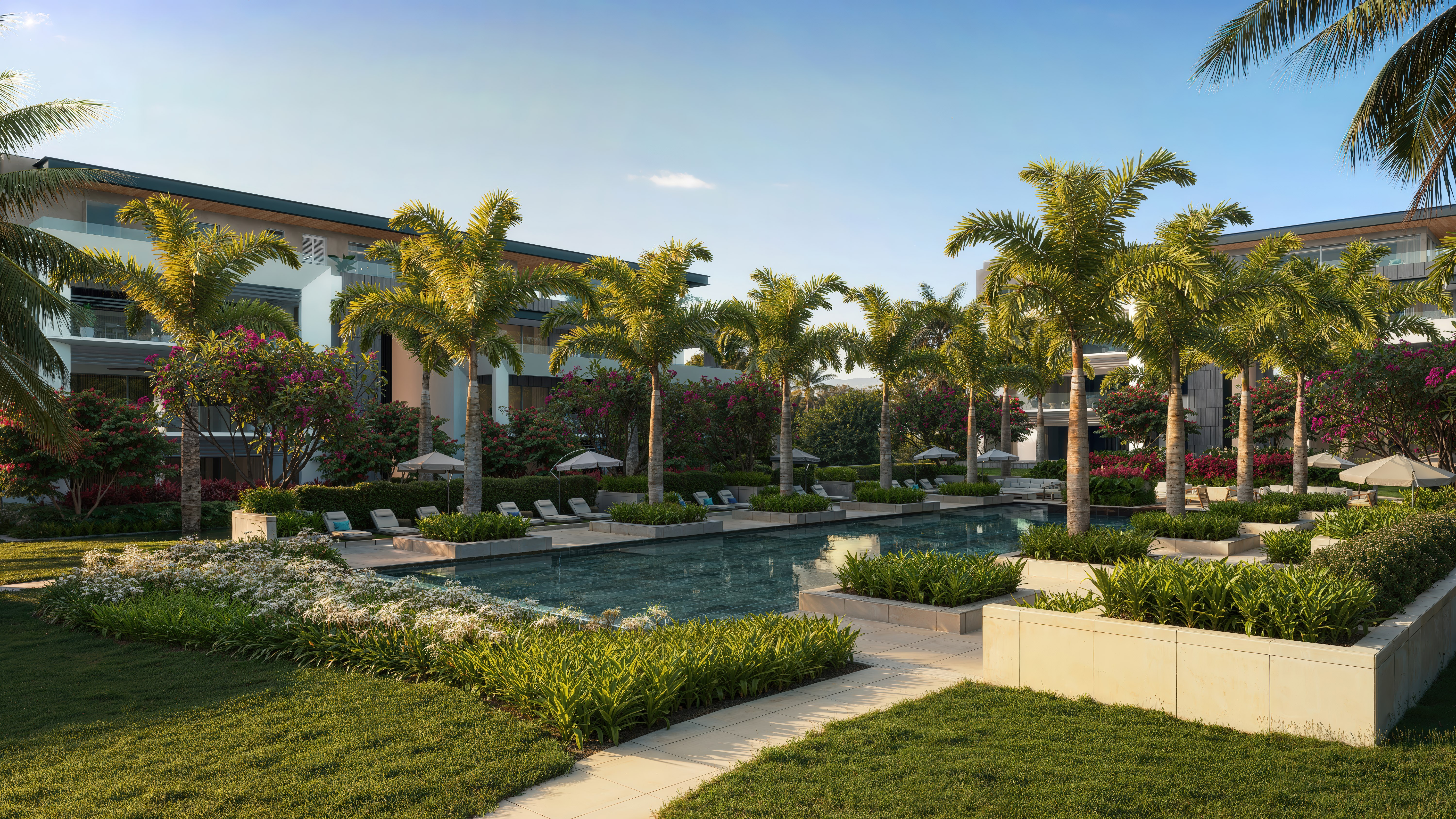
Commercial real estate in Mauritius is open to foreign investors, but through a permission system rather than a free market. A company with foreign shareholders must obtain Economic Development Board (EDB) authorisation to buy property for business use, while commercial leases of up to 30 years need no authorisation at all. Buyers pay 5% registration duty, there is no capital gains tax, and the market is concentrated in 3 places: Ébène, Port Louis and the new Smart Cities.
The residential market gets the headlines, but offices, shops and warehouses are where many international businesses first meet Mauritian property. A fund administrator leasing a floor in Ébène, a retailer taking a unit in a Smart City and an investor buying a small office building are all dealing with the same rules, and the same questions about rents, yields and exit.
This guide covers the office, retail and industrial markets, the rules for foreign ownership, taxes and leases, and our outlook. It was last updated on 18 September 2026.
Commercial real estate in Mauritius: key facts
- Foreign ownership: non-citizens and companies with non-citizen shareholders need EDB authorisation to acquire immovable property for business purposes, under the Non-Citizens (Property Restriction) Act.
- Leasing: commercial leases of up to 30 years do not require authorisation, according to EDB guidelines.
- Buying costs: 5% registration duty for the buyer and 5% land transfer tax for the seller.
- Tax: corporate income tax is 15%, with a 5% Fair Share Contribution on chargeable income above MUR 24 million from 1 July 2025 to 30 June 2028. There is no capital gains tax.
- Smart Cities: 18 projects hold Smart City certificates from the EDB, with an 8-year tax holiday on specified activities.
- Bank exposure: credit to commercial real estate was 8.6% of total private sector credit in June 2025, according to the Bank of Mauritius.
- Economy: GDP grew 2.0% year on year in Q1 2026, and the Bank of Mauritius Key Rate is 4.75%.
Where is the office market in Mauritius?
Mauritius has 3 office markets that serve different occupiers.
Ébène
Ébène, in the centre of the island, is the business district built around the Cybercity from the early 2000s. It hosts much of the global business, fund administration, banking, legal, accounting and technology sector. Its strengths are a single cluster of occupiers, motorway access and a skilled workforce living nearby. Its weaknesses are traffic at peak hours and an ageing first generation of buildings, which now compete with newer, greener stock elsewhere.
Port Louis
The capital remains the home of government, the courts, the port, the Stock Exchange of Mauritius and several bank headquarters. Demand here is driven by occupiers that need to be close to ministries, regulators and the harbour. The waterfront and city centre combine older buildings with some modern offices.
Smart Cities
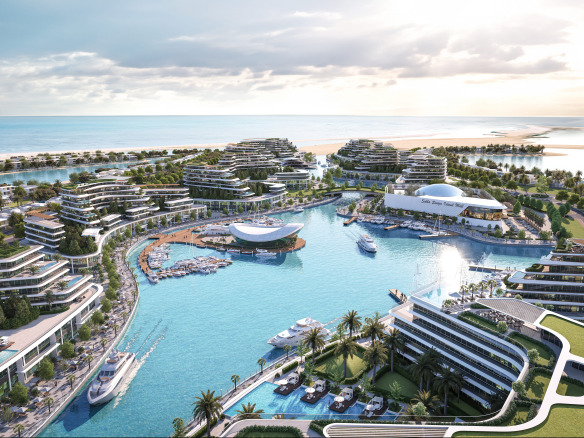
Smart Cities are mixed-use developments approved under the EDB Smart City Scheme, combining offices, homes, shops, schools and green space in a single master plan. The EDB lists 18 projects with Smart City certificates. They attract occupiers who want modern buildings, parking, and staff who can live and work in the same area. Moka, in the centre, is the most established cluster, with others in the north and west.
What offices rent for
Mauritius has no official office rent index. The best public indicator is listing data: PropertyCloud’s 2025 to 2026 listings put average asking rents for offices at about Rs604 per m² per month, across all locations and grades. Asking rents are not achieved rents, and Grade A space with backup power, parking and green certification commands a premium over older stock. For any specific building, rely on comparable leases, not portal averages.
What about retail and hospitality-led commercial property?
Retail in Mauritius is split into 3 formats:
- Regional malls in the centre and north, anchored by hypermarkets, fashion and cinemas, serving the whole island.
- Neighbourhood retail inside Smart Cities and larger residential developments, built around a supermarket, pharmacy, cafés and services.
- Tourism-led retail along the coast, particularly around Grand Baie in the north and Black River and Tamarin in the west, where restaurants, beach shops and services depend on visitors and residents of the EDB schemes.
Tourism matters here. Mauritius received about 1.43 million tourists in 2025, 3.9% more than in 2024, and each new residential scheme adds year-round demand for local shops and services. For an investor, the most resilient retail tends to be convenience-led and close to where people live, rather than purely tourist-facing.
Industrial and logistics property
Warehousing and light industrial space are concentrated around the port in Port Louis and in industrial zones across the island. Listing data from PropertyCloud shows average asking rents for warehouses of about Rs200 per m² per month, a fraction of office levels, reflecting simpler buildings and larger floor plates.
The Freeport regime is the main incentive for logistics. Freeport operators and private freeport developers pay corporate tax at 3%, according to PwC’s 2026 summary, instead of the standard 15%. For foreign investors, the logistics sector is also where the business purpose required by the EDB is easiest to demonstrate.
Can foreigners buy commercial property in Mauritius?
Yes, with authorisation. The Non-Citizens (Property Restriction) Act requires any non-citizen, or any company with non-citizen shareholders, to obtain authorisation before acquiring immovable property in Mauritius. Without it, a transfer is void. For business property, the EDB grants the authorisation. For the purchase of shares in a company that owns property, a Certificate of Approval from the Prime Minister’s Office applies.
The EDB guidelines define business purposes broadly: developing commercial buildings, shopping malls, offices and warehouses, running an operating business, and any other activity carried out for profit, except reselling bare land. Standard conditions include:
- the property must be used only for the approved purpose;
- it cannot be sold or transferred without prior EDB approval;
- speculation is not allowed;
- construction must usually be completed within 18 months, or equipment installed within 6 months;
- duties are paid on market value.
The EDB charges no processing fee for these applications. Our guide to foreign property ownership rules in Mauritius sets out the separate residential routes.
Leasing instead of buying
Most international occupiers lease. EDB guidelines exempt commercial leases of up to 30 years from authorisation, which makes leasing quick and simple for a foreign-owned company. Longer leases need EDB authorisation. When you negotiate a lease, focus on the rent review and indexation clause, service charges and who pays for structural repairs, fit-out contributions and rent-free periods, backup power and parking, and your break options.
Working in Mauritius as an investor
Foreign business owners who want to live on the island usually hold an Occupation Permit. Since 13 August 2026, the investor category requires an investment of USD 100,000, the self-employed category USD 50,000 plus turnover tests, and the professional category a minimum basic salary of MUR 50,000 a month. Our overview of the Mauritius Budget 2026-2027 covers the wider changes.
Taxes on commercial real estate in Mauritius
| Tax | Rate | Who pays |
|---|---|---|
| Registration duty | 5% | Buyer |
| Land transfer tax | 5% | Seller |
| Corporate income tax on rental profits | 15% | Owning company |
| Fair Share Contribution, 2025 to 2028 | 5% on chargeable income above MUR 24 million | Larger companies |
| Freeport operators | 3% corporate tax | Qualifying companies |
| Capital gains tax | None | |
| Smart City incentives | 8-year tax holiday on specified activities | Approved developers and activities |
The duty picture for commercial property did not change with the Finance Act 2026. The new 10% seller’s duty introduced that year applies only to residential property on State land or Pas Géométriques transferred to non-citizens. More detail on the 5% duty is in our article on registration fees in Mauritius.
What yields can you expect from commercial property in Mauritius?
There is no official series of commercial property yields in Mauritius, and published figures from international research houses do not currently cover the island. Anyone quoting a precise market yield is quoting their own deals.
What we can say with confidence is how yields are built. Rents are set in rupees for most local occupiers and sometimes in dollars or euros for international tenants. Void periods are the main risk in older office stock, and a long lease to a strong tenant is worth far more than a higher headline rent from a weaker tenant. Commercial property needs to earn a clear premium over residential yields, which run at about 3% to 5% gross for long-term lets, to justify the extra management and vacancy risk.
Outlook for commercial real estate in Mauritius
The context for 2026 is a slower economy and careful lenders. GDP growth eased to 2.0% year on year in Q1 2026, and construction activity has been weak. The Bank of Mauritius reported that bank credit to commercial real estate fell in the first half of 2025, and that the non-performing loan ratio for real estate activities rose to 11.6% in June 2025, from 7.4% in December 2024. Financing for speculative commercial projects is harder to obtain than it was.
Against that, demand for well-located, modern space is steady. Financial services and technology firms keep growing in Ébène and the Smart Cities, tourism arrivals grew again in 2025, and every new residential scheme needs shops and services. We expect the gap to keep widening: quality buildings with strong tenants will hold their value, while older, poorly located stock will need price cuts or refurbishment. Our analysis of Mauritius real estate trends 2026 covers the residential side.
A checklist before you buy or lease
- Confirm the route: do you need EDB authorisation, a PMO certificate for a share deal, or is the lease short enough to need neither?
- Check title and zoning: confirm the land is freehold and that the permitted use matches your business.
- Ask for the rent roll: actual leases, expiries and arrears, not asking rents.
- Price the building, not the brochure: backup power, parking, energy performance and maintenance history drive tenant demand.
- Plan the exit: EDB conditions mean a sale needs approval, so factor time into your holding plan.
- Structure the ownership early: corporate tax, the Fair Share Contribution and future sale all depend on how the property is held.
Frequently asked questions
Can a foreign company buy commercial property in Mauritius?
Yes. A non-citizen or a company with non-citizen shareholders can buy commercial property for a business purpose with authorisation from the Economic Development Board. The property must be used for the approved purpose, cannot be resold without EDB approval, and speculation is not allowed. Share purchases in property-owning companies need a Certificate of Approval from the Prime Minister’s Office.
Do foreigners need approval to lease an office in Mauritius?
Not for most leases. EDB guidelines exempt commercial leases of up to 30 years from authorisation under the Non-Citizens (Property Restriction) Act, so a foreign-owned company can lease offices, shops or warehouses directly. Leases longer than 30 years require EDB authorisation. Always check the lease against current EDB guidance before signing.
What are office rents in Ébène?
There is no official office rent index in Mauritius. Listing data from PropertyCloud for 2025 to 2026 shows average asking rents for offices across the island of about Rs604 per m² per month. Modern Grade A space in Ébène and the Smart Cities with backup power and parking typically asks more than older buildings, and achieved rents depend on lease length and incentives.
Is there capital gains tax on commercial property in Mauritius?
No. Mauritius does not levy capital gains tax on the sale of property. The seller pays 5% land transfer tax and the buyer 5% registration duty. Rental profits earned by a company are taxed at 15% corporate income tax, plus a 5% Fair Share Contribution on chargeable income above MUR 24 million until June 2028.
What is a Smart City in Mauritius?
A Smart City is a mixed-use development approved under the EDB Smart City Scheme, combining offices, homes, retail, schools and green space in a single master plan. The EDB lists 18 projects with Smart City certificates. Incentives include an 8-year tax holiday on specified activities and VAT recovery on buildings and capital goods.
Is commercial real estate in Mauritius a good investment in 2026?
It can be, but selectively. Demand for modern offices, convenience retail and logistics is steady, while older office stock faces competition from newer buildings. There is no official commercial yield series, so each deal must be judged on its leases, tenants and building quality. Foreign buyers also need EDB authorisation and should plan for approval on resale.
Work with an adviser who knows the rules and the market
Commercial property in Mauritius rewards buyers and tenants who understand the permission system as well as the buildings. Getting the route right at the start saves months later.
LIVERIA International Realty is a Mauritius-based luxury real estate agency with a presence in Dubai and London, recognised by the Luxury Lifestyle Awards in 2024 and 2026 and by the Global Elite Awards in 2025 and 2026, which named LIVERIA among the Top 100 Companies Worldwide in both years. We advise international companies, investors and landlords on buying, leasing and letting property in Mauritius, working with local legal and tax advisers on EDB applications, and we offer access to off-market properties that never reach the portals. Reach us at [email protected].
Sources
- Economic Development Board, acquisition and lease of immovable property by non-citizens for business purposes (guidelines)
- Economic Development Board, real estate and Smart City Scheme
- PwC Worldwide Tax Summaries, Mauritius corporate taxes on income
- Bank of Mauritius, Financial Stability Report December 2025
- PropertyCloud, commercial property rental prices in Mauritius