Buying property in Mauritius as a South African is straightforward if you plan the money first. You can buy through an approved Economic Development Board (EDB) scheme, you will pay 5% registration duty, and a purchase of USD 375,000 or more gives you and your family a Mauritian residence permit. On the South African side, you can move up to R2 million a year under the Single Discretionary Allowance and up to R10 million under the Foreign Investment Allowance with a SARS tax compliance PIN.
South Africans are one of the most important buyer groups on the island. Bank of Mauritius figures have ranked South Africa as the second-largest source of foreign investment into Mauritian real estate, behind France. The reasons are easy to understand: a 4-hour flight, a 2-hour time difference, English as the working language, a hard currency asset, and a safe, stable place to live or to keep as a plan B.
This guide covers the full process for a South African buyer in 2026, from getting the rands out to holding the title deed. It was last updated on 18 September 2026.
Buying property in Mauritius as a South African: key facts
- Who can buy: any South African citizen or resident, through an approved EDB scheme (PDS, IRS, RES, Smart City) or a G+2 apartment of at least MUR 6 million.
- Moving the money: up to R2 million a year under the SDA without a tax clearance, and up to R10 million a year under the FIA with a SARS tax compliance status PIN. Couples can each use their own allowances. The higher SDA took effect on 8 April 2026.
- Buying costs: 5% registration duty, notary fees of about 1% to 2%, and small transfer costs. Budget 7% to 8% on top of the price.
- Residence: a purchase of USD 375,000 or more carries a residence permit for you, your spouse and children under 24, for as long as you own the property.
- Mauritian taxes: no capital gains tax, no inheritance tax and no annual property tax on individually held residential property.
- South African taxes: while you remain South African tax resident, SARS taxes your worldwide income and gains. Mauritius and South Africa have a double taxation agreement.
Step 1: plan how you will move the money out of South Africa
This is the step South Africans underestimate, and the one that most often delays a purchase. Mauritian developers work in euros or dollars, and the funds must arrive in Mauritius in foreign currency.
The Single Discretionary Allowance: R2 million a year
The 2026 Budget doubled the Single Discretionary Allowance from R1 million to R2 million per adult per calendar year. You can use it for offshore investment, including property, without a SARS tax clearance. For a couple, that is R4 million a year before any tax clearance is needed.
The Foreign Investment Allowance: R10 million a year
Above the SDA, each adult can move up to R10 million a year under the Foreign Investment Allowance. This requires a tax compliance status (TCS) PIN from SARS for foreign investment, which SARS issues after checking that your tax affairs are in order and that the source of funds is declared. Allow several weeks for approval, and start before you sign anything.
How the allowances work in practice
A couple buying a USD 400,000 apartment can typically fund it within a single calendar year by combining both SDAs and part of their FIAs. Larger purchases are often funded across 2 calendar years, which fits well with off-plan payment schedules that run over 18 to 36 months. Amounts above R12 million per person per year need specific approval from the South African Reserve Bank.
Our advice: work with a specialist forex provider, use their tax clearance service, and set up the transfers before you commit to a payment schedule. Rand volatility can move a purchase price by several hundred thousand rand in a few months, so consider forward contracts on large tranches and keep a currency buffer of 5% to 10%.
Step 2: choose the right scheme
A non-citizen cannot buy just any house in Mauritius. You buy through one of the approved routes:
- PDS (Property Development Scheme): the main route today. Villas and apartments in approved developments, often with hotel-style services, golf or beach access.
- IRS and RES: the original luxury schemes. Mostly resale today, often in mature estates.
- Smart City Scheme: mixed-use developments such as those around Moka, combining homes, offices and schools.
- G+2 apartments: apartments in buildings of at least ground plus 2 floors, with a minimum price of MUR 6 million.
Each route has the same core protection: the EDB approves the project and the buyer, and the purchase is completed before a Mauritian notary. The full framework is explained in our guide to foreign property ownership rules in Mauritius.
Step 3: understand what you will actually pay
| Cost | Who pays | Amount |
|---|---|---|
| Registration duty | Buyer | 5% of the price |
| Notary fees | Buyer | About 1% to 2% |
| Land transfer tax | Seller | 5% |
| Duty on State land or Pas Géométriques transfers to non-citizens | Seller | 10% |
| Agency commission on new developments | Developer | Built into the price |
Registration duty was due to rise to 10% on 1 July 2026, but the Finance Act 2026 repealed the increase before it took effect. It remains 5%. The details are in our article on registration fees in Mauritius.
Step 4: residency and what it means for your family
A qualifying purchase of USD 375,000 or more gives you a residence permit for as long as you own the property. It covers your spouse and children under 24, and couples who each invest USD 375,000 or more qualify in their own right. The permit lets you live in Mauritius, enrol your children in local international schools, open local bank accounts and, if you choose, move your life here.
It is a residence permit, not citizenship. It does not give you a Mauritian passport, and you keep your South African citizenship.
For many South African families, the value of this permit is the point of the purchase. It is a secure second base in a stable democracy, 4 hours from Johannesburg, which the whole family can use.
Step 5: get the tax picture right on both sides
In Mauritius
Mauritius does not tax capital gains on individually held residential property, and there is no inheritance tax or annual property tax. If you rent the property out, the rental income is taxable in Mauritius at the progressive personal rates of 0%, 10%, 20% and 35%, after allowable expenses.
You become tax resident in Mauritius if you spend 183 days or more in the country in an income year, or 270 days or more across the current and 2 preceding years. Tax residents pay tax on foreign income only when it is remitted to Mauritius.
In South Africa
As long as you remain a South African tax resident, SARS taxes your worldwide income and capital gains, including rental income and any gain on selling your Mauritian property, with credit for tax paid in Mauritius under the double taxation agreement. South African estate duty can also apply to worldwide assets. If you plan to relocate permanently and cease South African tax residency, that triggers its own exit rules.
Take South African tax advice before you buy. How you hold the property, and whether you intend to relocate, changes the answer. We work alongside South African and Mauritian tax advisers for clients who need it.
Step 6: choose where to buy
The regions that South African buyers favour most are:
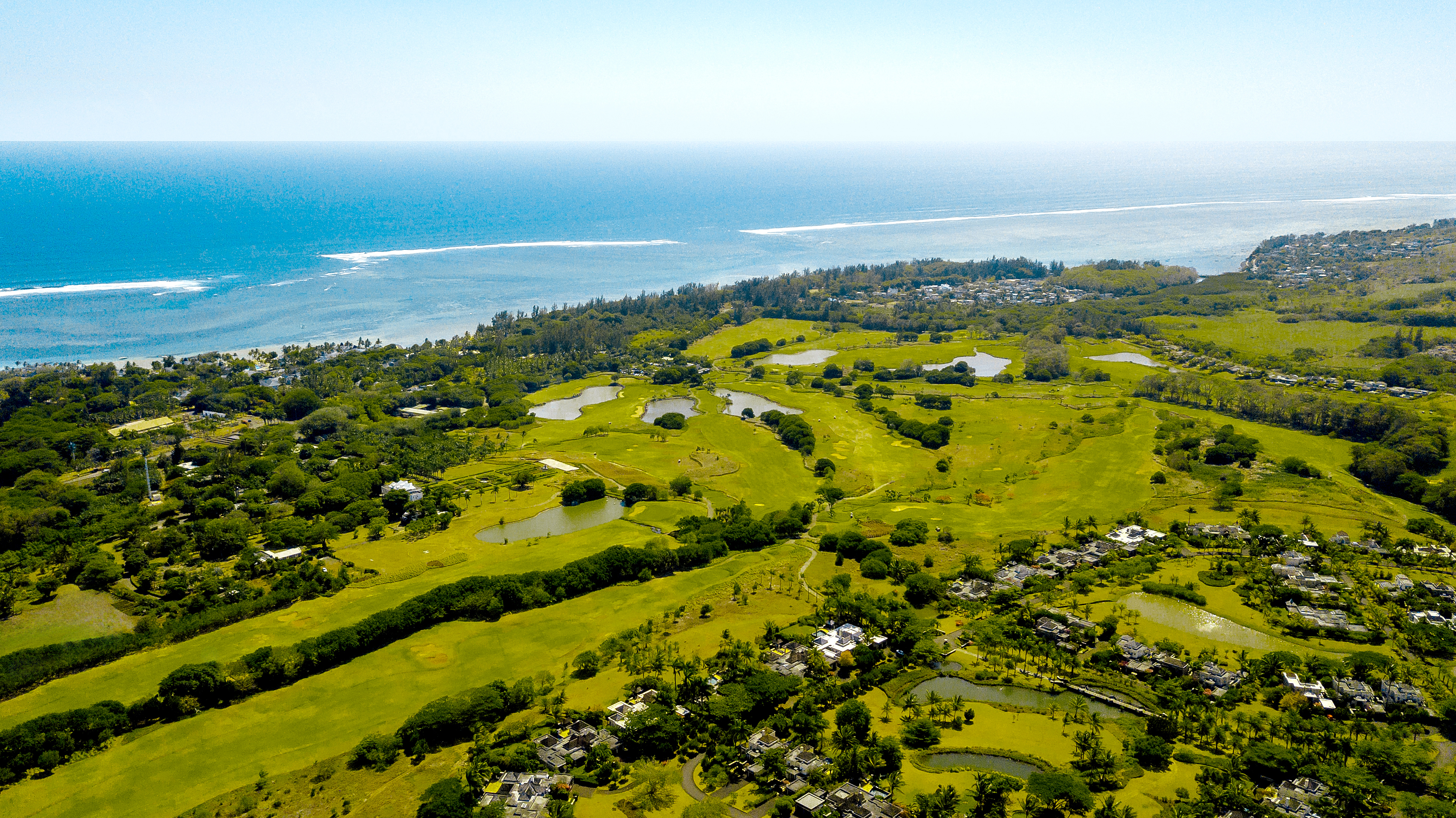
- The West, around Black River, Tamarin and Rivière Noire: mountains, sunsets, golf and a strong South African community. The natural choice for families who want space and an outdoor lifestyle.
- The North, around Grand Baie and Mont Choisy: the busiest and most convenient part of the island, with the strongest rental market and the widest choice of stock.
- Moka and the Centre: schools, offices and lower entry prices, popular with families who will work on the island.
Our guide to the best regions to buy property in Mauritius compares each coast with current price ranges.
Financing as a South African buyer
Mauritian banks lend to non-residents, generally up to 70% of the value, and several banks on the island have dedicated desks for South African clients. On a first purchase from the developer under IRS, RES, PDS or Smart City, EDB rules require the first USD 750,000 to be your own funds transferred from abroad, so a local loan can only cover the balance above that. The loan is usually in euros or dollars, and your deposit and repayments must come from abroad in foreign currency. Many South African buyers prefer to fund in cash through their allowances, or to combine a smaller Mauritian loan with staged transfers to match an off-plan payment schedule.
Common mistakes we see
- Signing a reservation before the funds are cleared. Get your SARS tax compliance PIN and forex route sorted first.
- Ignoring the exchange rate. A weaker rand between reservation and final payment can add materially to your cost.
- Buying for the brochure, not for how you will live. Choose the region for school runs, work and weekends, not the sunset photo.
- Not checking land tenure on the coast. Beachfront property on State land or Pas Géométriques carries different rules and costs.
- Assuming residence means tax residence. The permit and your tax status are separate questions.
Frequently asked questions
Can South Africans buy property in Mauritius?
Yes. South African citizens and residents can buy property in Mauritius through an approved EDB scheme such as PDS, IRS, RES or Smart City, or buy a G+2 apartment priced at MUR 6 million or more. The purchase is completed before a Mauritian notary and registered in the buyer’s name.
How much money can a South African take out to buy property in Mauritius?
In 2026, each South African adult can move up to R2 million a year under the Single Discretionary Allowance without a tax clearance, and up to R10 million a year under the Foreign Investment Allowance with a SARS tax compliance status PIN. That is up to R12 million per person per year. Larger amounts need South African Reserve Bank approval.
Does buying property in Mauritius give South Africans residency?
Yes, if the purchase is USD 375,000 or more. The buyer receives a residence permit valid for as long as the property is owned, extending to a spouse and children under 24. It is residency, not citizenship.
What taxes do South Africans pay when buying property in Mauritius?
The buyer pays 5% registration duty plus notary fees of about 1% to 2%. Mauritius has no capital gains tax, inheritance tax or annual property tax on residential property owned by individuals. South African tax residents remain taxable in South Africa on worldwide income and gains, with credit for Mauritian tax under the double taxation agreement.
How long is the flight from South Africa to Mauritius?
Direct flights from Johannesburg take about 4 hours, with direct services from Cape Town as well. Mauritius is 2 hours ahead of South Africa.
Where do South Africans buy property in Mauritius?
The West, around Black River and Tamarin, is the most popular area with South African families. The North, around Grand Baie, is favoured for rental income and convenience, and Moka in the Centre for schools and work.
Buy with a team that knows both sides of the transfer
Buying in Mauritius from South Africa is 2 transactions, not 1: moving the money correctly out of South Africa, and buying correctly in Mauritius. When the 2 are planned together, the process is calm and predictable. When they are not, deposits sit waiting for tax clearances and exchange rates move against you.
LIVERIA International Realty is a Mauritius-based luxury real estate agency with a presence in Dubai and London, recognised by the Luxury Lifestyle Awards in 2024 and 2026 and by the Global Elite Awards in 2025 and 2026, which named LIVERIA among the Top 100 Companies Worldwide in both years. We guide South African buyers from the first shortlist to the notary, including off-market properties that never reach a portal, and we coordinate with your forex provider and tax adviser along the way. Reach us at [email protected].