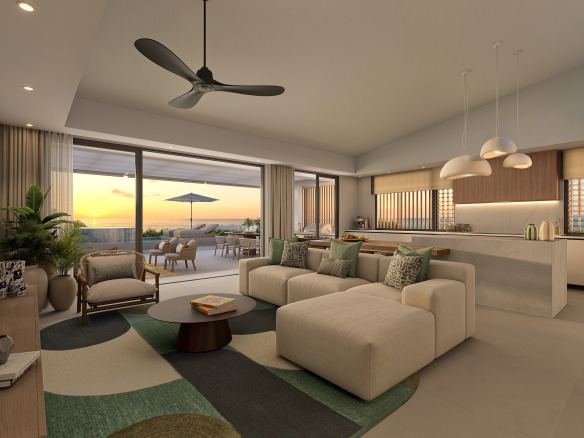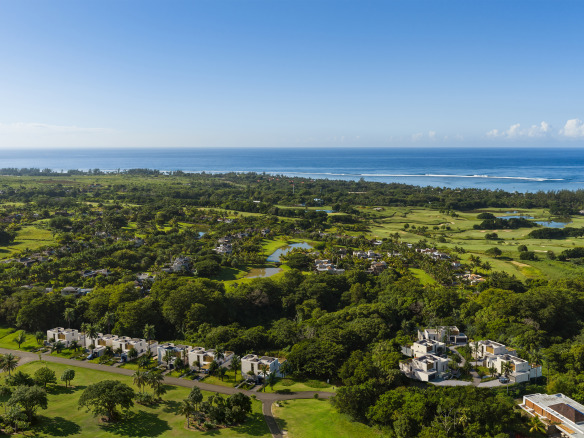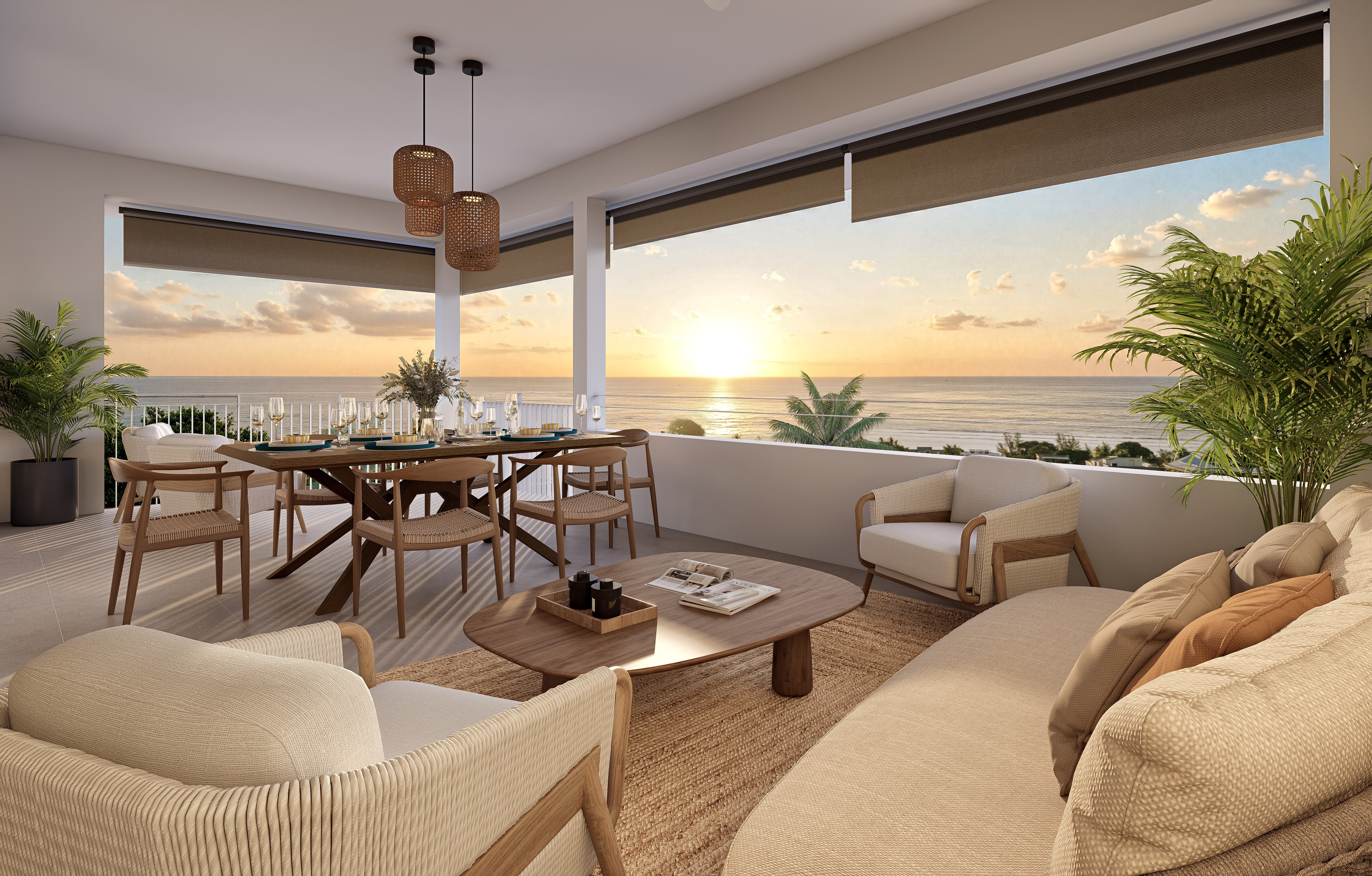
A holiday rental in Mauritius can earn around 5% to 9% gross a year when it is licensed, well located and actively managed, compared with about 3% to 5% for a long-term let. Demand is solid: the island welcomed 1,436,250 tourists in 2025, up 3.9%, and arrivals rose another 6.8% in the first quarter of 2026. The catch is compliance and management. Any villa or apartment let for less than 12 months needs a Tourism Authority licence, guests pay a EUR 3 nightly tourist fee, and net returns depend far more on the operator than on the brochure.
Short-term letting is the reason many international buyers look at Mauritius in the first place. It can also be the reason some are disappointed. The difference usually comes down to 3 things: the licence, the location and the management. This guide sets out the demand, the rules, the realistic numbers and the costs, with a worked example you can adapt to your own property. It was last updated on 18 September 2026.
Holiday rental in Mauritius: key facts
- Demand: 1,436,250 tourist arrivals in 2025 (+3.9%), and 348,445 in Q1 2026 (+6.8% on Q1 2025), according to Statistics Mauritius.
- Main markets: France, the United Kingdom, Réunion, Germany, South Africa and India supplied 68.4% of arrivals in 2025.
- Licence: accommodation rented for less than 12 months needs a licence from the Tourism Authority, under the Tourism Authority Act 2006.
- Tourist fee: EUR 3 per tourist per night since 1 October 2025, collected by the accommodation operator and declared monthly to the MRA.
- Yields: well-managed short-lets typically return 5% to 9% gross; long-term lets 3% to 5% gross.
- Scheme property: under the EDB guidelines, a PDS owner may rent through the PDS company or a service provider appointed by it.
- Tax: rental profits are taxable in Mauritius, and VAT registration is compulsory once taxable turnover passes MUR 3 million a year.
How strong is holiday rental demand in Mauritius in 2026?
Tourism is a pillar of the Mauritian economy, and the numbers have moved in the right direction. Arrivals reached 1,436,250 in 2025. France remains the largest market by some distance, with 337,502 visitors, while India grew fastest, up 33.5% to 75,808. In the first quarter of 2026, Germany jumped 50.3% and India 21.1%, which broadens the base of guests beyond the traditional French and British holidaymakers.
When is high season?
Mauritius is a year-round destination, but demand is not flat. In our experience, the strongest months for villas and apartments are the southern summer from October to January, including the Christmas and New Year peak, plus the European school holidays at Easter and in July and August. May, June and September are usually quieter, and pricing needs to reflect that. A good operator adjusts nightly rates weekly, not once a year.
Who books private rentals?
Families and groups who want space and a kitchen, longer-stay guests from Europe escaping winter, and returning visitors who already know the island. These guests compare a villa directly with a hotel, so they expect hotel-level cleanliness, reliable Wi-Fi, air conditioning and a quick response when something breaks.
What licence do you need to rent out a holiday home in Mauritius?
This is the part too many owners skip. The Tourism Authority has stated that owners of villas, bungalows, apartments, guesthouses and similar accommodation rented for less than 12 months must hold a valid licence under the Tourism Authority Act 2006. It carries out island-wide inspections with the police, and it has warned that contraventions will be established against anyone trading illegally. Listing a property online does not make it legal.
Tourist Accommodation Certificate and tourist residence
The Tourism Authority licenses 4 categories of accommodation: hotel, guest house, tourist residence and domaine. A private villa or apartment let to holidaymakers normally falls under tourist residence, defined as self-catering premises, other than a hotel or guesthouse, offering sleeping accommodation to tourists for a fee. The Tourist Accommodation Certificate is valid for 3 years, and renewal should be filed within the 3 months before expiry.
The tourist residence guidelines set minimum standards, including:
- a living area, dining space, kitchen, bathroom and parking;
- bedroom sizes of at least 10 m² for a single, 12 m² for a double and 16 m² for a family room;
- Wi-Fi, laundry facilities and emergency lighting;
- a burglar alarm with rapid response, a digital safe and a first-aid kit, with a standby generator for units of 4 or more bedrooms.
Can you rent out PDS or IRS property?
Yes, within the rules of the scheme. The EDB guidelines for the Property Development Scheme state that an owner may rent the property through the PDS company holding the certificate or through a service provider it appoints. In practice, many PDS, IRS and RES estates run a rental programme through a licensed management company, and the Tourism Authority asks for the agreement between the scheme certificate holder and that company when licensing it. Before you buy, read the deed of sale and the estate rules for 3 things: whether you can let privately or only through the estate operator, how revenue is shared, and how many nights you can use the property yourself. For the ownership framework, see our guide to foreign property ownership rules in Mauritius.
What rental yield can a holiday home in Mauritius earn?
Well-managed short-lets typically return 5% to 9% gross, while long-term lets sit around 3% to 5%. The spread is wide because so much depends on the property. A villa with a pool within walking distance of a beach can command a strong nightly rate. An apartment inland, without a view, competes on price with hundreds of others.
The following table is an illustrative example, not a forecast or a LIVERIA transaction. It shows how a gross figure turns into a net figure, using stated assumptions.
| Line (illustrative, 2-bedroom apartment) | Assumption | EUR per year |
|---|---|---|
| Purchase price | Coastal North, finished unit | 500,000 |
| Gross revenue | 190 nights at EUR 210 average | 39,900 |
| Gross yield | Revenue divided by price | 8.0% |
| Booking platform commissions | About 15% of revenue | -5,985 |
| Management, cleaning and laundry | About 25% of revenue | -9,975 |
| Syndic charges and insurance | Varies by development | -4,500 |
| Utilities, internet and maintenance | Heavy air conditioning use | -4,000 |
| Licence, accounting and reserve for replacements | Furniture, linen, appliances | -2,500 |
| Net operating income before tax | 12,940 | |
| Net yield before tax | 2.6% |
The point of the example is simple: an 8% gross yield can shrink to under 3% net once real costs are counted. Push occupancy or the average rate up, and the net figure rises quickly, because syndic charges, insurance and much of the upkeep are fixed. That is why management quality matters more than any other variable. The tourist fee is not in the table because it is collected from guests and passed to the MRA, not paid by the owner.
What costs and taxes apply to a holiday rental in Mauritius?
Buying costs
Before the first booking, budget 7% to 8% on top of the price for 5% registration duty, notary fees and transfer costs. Our breakdown of the cost of buying property in Mauritius covers each item.
Running costs
Syndic charges, insurance, electricity, water, internet, pool and garden care, cleaning, laundry, repairs and the licence itself. Furnishing to rental standard is a real upfront cost, and linen and small appliances wear out faster than in a private home.
Income tax
Rental profits from a Mauritian property are taxable in Mauritius. For individuals, the rates from 1 July 2026 are 0% on the first MUR 500,000 of chargeable income, 10% on the next MUR 500,000, 20% up to MUR 12 million and 35% above that. There is no capital gains tax on individually held residential property when you sell. How you hold the property, personally or through a company, changes the calculation, so take tax advice before you sign.
VAT and the tourist fee
From 1 October 2025 the compulsory VAT registration threshold is taxable turnover of MUR 3 million a year. A single high-end villa can pass that level, so check it with your accountant. Separately, the tourist fee of EUR 3 per tourist per night applies to guests aged 12 and over at registered accommodation, including tourist residences. The operator collects it, files a monthly return with the MRA by the end of the following month, and pays a 10% penalty plus interest if late. Mauritian residents and residence permit holders are exempt.
Where are the best areas for a holiday rental in Mauritius?
- North (Grand Baie, Mont Choisy, Pereybere): the deepest short-let demand, with restaurants, beaches and nightlife close by. LIVERIA’s indicative range here is EUR 190,000 to EUR 3,100,000, with a median of about EUR 850,000.
- West (Black River, Tamarin, Le Morne): strong for villas, kitesurfing and families, with sunsets and a quieter feel. Indicative range EUR 285,000 to EUR 5,350,000.
- East (Belle Mare, Beau Champ): beaches and privacy, suited to premium villas where guests expect resort-style service. From EUR 500,000 to over EUR 6,000,000.
- Centre (Moka, Ébène): lower entry prices from around EUR 135,000, but demand is mainly from professionals, so long-term letting usually fits better than holiday rental.
Our guide to the best regions to buy property in Mauritius compares each coast in detail.
How to maximise returns on a holiday rental in Mauritius
- Buy for the guest, not only for yourself. Walking distance to a beach, a pool, sea views and parking drive both rate and occupancy.
- Licence first. Budget time and cost for the Tourist Accommodation Certificate before you take bookings.
- Check the scheme rules before signing. Know whether you must use the estate’s rental programme and what share of revenue it keeps.
- Price dynamically. Rates should move with season, school holidays, events and lead time.
- Mix channels. Combine booking platforms with direct and repeat guests to reduce commission.
- Plan your own use. Every peak week you spend in the property is a peak week you do not rent.
- Keep a reserve. Salt air and humidity are hard on appliances, air conditioning and outdoor furniture.
- Compare against a long lease. A furnished long-term let with a reliable tenant can beat a poorly run short-let on net income. We compare both in managed lease versus DIY letting.
Frequently asked questions
Do I need a licence for a holiday rental in Mauritius?
Yes. The Tourism Authority requires owners of villas, bungalows, apartments and similar accommodation rented for less than 12 months to hold a valid licence under the Tourism Authority Act 2006. Private holiday homes usually fall under the tourist residence category of the Tourist Accommodation Certificate, valid for 3 years. The Authority inspects with the police and pursues unlicensed operators.
What is the tourist fee in Mauritius?
Since 1 October 2025, tourists aged 12 and over pay EUR 3 per night at registered accommodation, including hotels, guesthouses and tourist residences. The operator collects the fee and files a monthly return with the Mauritius Revenue Authority. Children under 12, Mauritian residents and holders of residence permits or Premium Visas are exempt from paying it.
What yield can I expect from a holiday rental in Mauritius?
Well-managed, licensed short-term rentals typically achieve 5% to 9% gross a year, against 3% to 5% for long-term lets. Net returns can be much lower once platform commissions, management, cleaning, syndic charges, utilities and maintenance are deducted. Location, occupancy and the quality of the operator make the biggest difference to the final figure.
Can foreigners rent out property bought under PDS or IRS?
Yes. The EDB guidelines allow a PDS owner to rent the property through the PDS company or a service provider it appoints. Many PDS, IRS and RES estates operate a rental programme through a licensed management company. Check the deed of sale and estate rules for revenue sharing, private letting rights and limits on your own use before you commit.
Is rental income taxed in Mauritius?
Yes. Rental profits from Mauritian property are taxable in Mauritius. For individuals, from 1 July 2026 the first MUR 500,000 of chargeable income is taxed at 0%, then 10%, 20% and 35% in bands. VAT registration becomes compulsory once taxable turnover exceeds MUR 3 million a year. Take local tax advice on the best holding structure.
Which area is best for a holiday rental in Mauritius?
The North, around Grand Baie, Mont Choisy and Pereybere, has the deepest short-let demand thanks to its beaches, restaurants and amenities. The West, around Tamarin and Black River, suits villas and active holidays. The East appeals to premium guests looking for privacy. The Centre is better suited to long-term letting to professionals.
Get your rental numbers right before you buy
A holiday rental is a small hospitality business. It rewards the right property in the right place, run properly, and it punishes guesswork. The time to test the numbers is before you sign, not after the furniture arrives.
LIVERIA International Realty is a Mauritius-based luxury real estate agency with a presence in Dubai and London, recognised by the Luxury Lifestyle Awards in 2024 and 2026 and by the Global Elite Awards in 2025 and 2026, which named LIVERIA among the Top 100 Companies Worldwide in both years. We help international buyers choose property with real rental potential, advise landlords on licensing and management, and offer managed rentals, as well as access to off-market properties that never reach a portal. Reach us at [email protected].