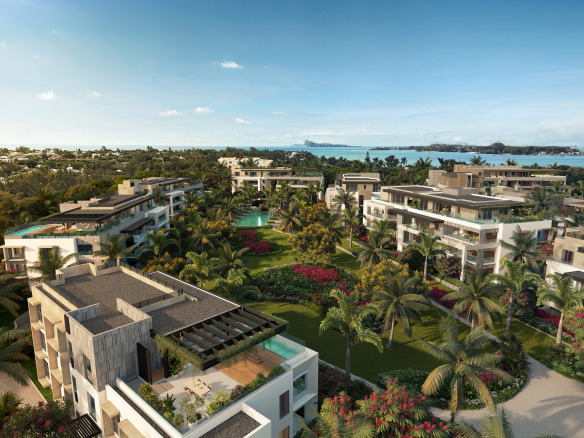
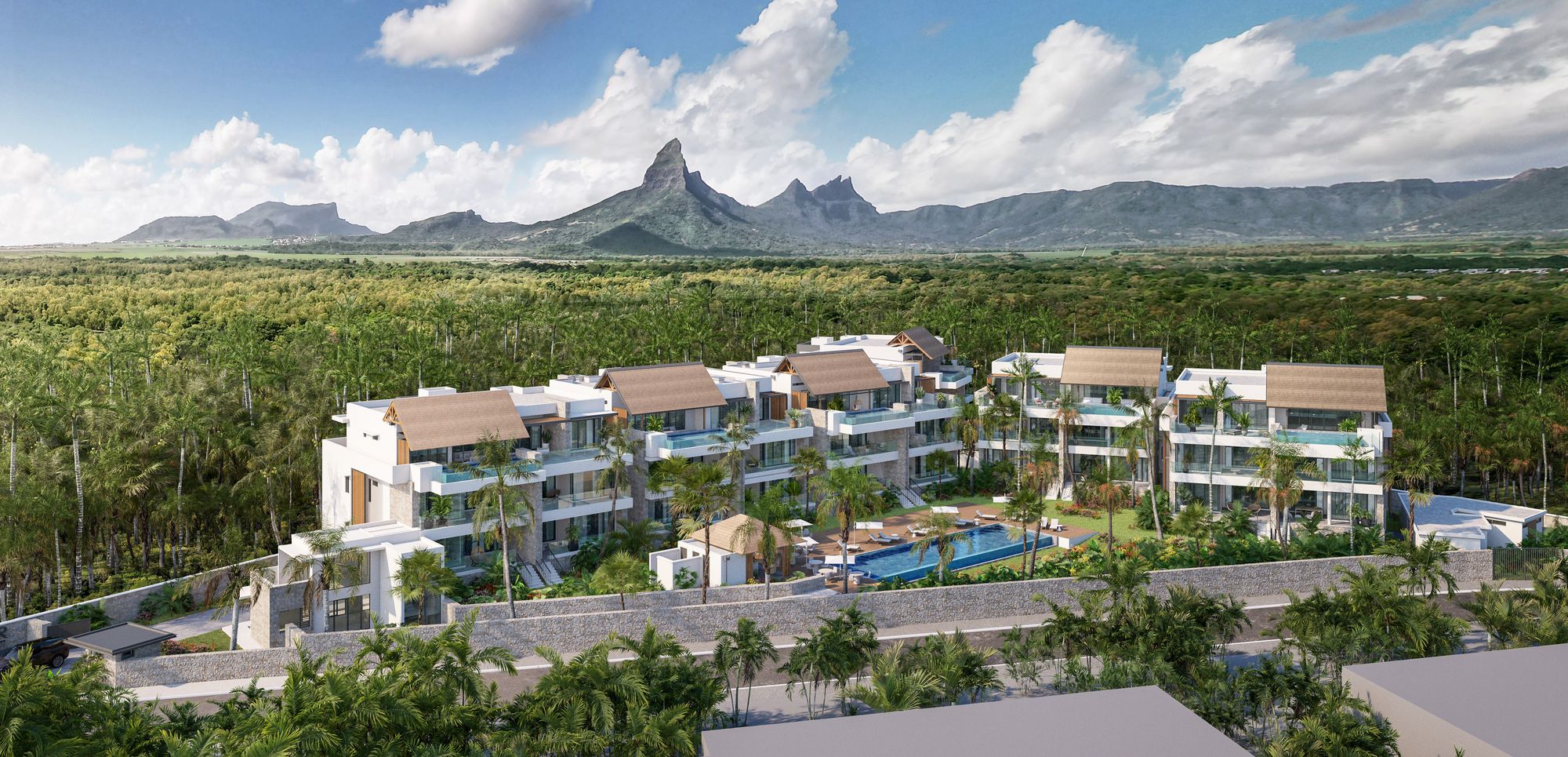
The main types of homes in Mauritius are scheme villas, beachfront villas, apartments in G+2 buildings or approved developments, penthouses, golf estate homes, townhouses, Smart City homes and traditional Creole houses. Foreign buyers can own most of them, but only through an approved Economic Development Board (EDB) route: a PDS, IRS or RES scheme, the Smart City Scheme, or an apartment in a building of ground plus at least 2 floors priced from MUR 6 million. A traditional Creole house on private land is, in practice, a home for Mauritian citizens.
The type of home you choose decides whether you can buy it as a non-citizen, whether it carries a residence permit, what you pay in service charges, and how easily you can let or sell it later.
This guide explains each property type, who can buy it, what it typically costs and where its strengths and weaknesses lie. It was last updated on 18 September 2026.
Types of homes in Mauritius: key facts
- Legal routes for foreigners: PDS, IRS and RES schemes (IRS and RES are now mostly resale), the Smart City Scheme, and G+2 apartments from MUR 6 million.
- Residence permit: a qualifying purchase of USD 375,000 or more gives a residence permit for as long as you hold the property, extended to your spouse and children under 24.
- No bare land outside schemes: non-citizens cannot buy bare land outside the approved routes. Land that forms part of a scheme villa plot comes with the villa.
- Buying costs: 5% registration duty, notary fees of about 1% to 2% and small transfer costs. Budget 7% to 8% on top of the price.
- Ongoing costs: no annual property tax, no capital gains tax on individually held residential property and no inheritance tax. You will pay syndic charges in any shared development.
- Indicative prices (LIVERIA inventory, September 2026): from about EUR 135,000 in the Centre to over EUR 6,000,000 on the East coast.
Which types of homes can foreigners buy in Mauritius?
Mauritius has 2 property markets. The local market, priced in rupees, is for citizens. The scheme market, usually priced in euros or dollars, is open to non-citizens with EDB approval. A foreigner can only buy a home that sits inside an approved route:
- PDS (Property Development Scheme): the main route today, covering villas, apartments, penthouses and townhouses in approved developments. There is no minimum price under PDS, but only purchases of USD 375,000 or more carry residency.
- IRS and RES: the older luxury schemes. No new projects are approved, so you buy on the resale market, often in mature estates with golf or beach access.
- Smart City Scheme: homes inside mixed-use districts.
- G+2 apartments: any apartment in a building of at least 2 floors above the ground floor, with a minimum price of MUR 6 million.
Our full guide to foreign property ownership rules in Mauritius explains each scheme in detail.
What are the popular types of homes in Mauritius?
Scheme villas
The scheme villa is the classic foreign purchase: a detached house of 3 to 5 bedrooms with a private pool, inside a gated PDS, IRS or RES estate that handles security and maintenance.
- Who can buy: citizens and non-citizens.
- Typical price: most sit above the USD 375,000 residency threshold. In the West the LIVERIA range runs from EUR 285,000 to EUR 5,350,000, with a median around EUR 1,180,000.
- Pros: residency, privacy, managed grounds and strong resale demand.
- Cons: syndic charges can be significant, architectural rules limit what you can change, and the most popular estates price in a premium.
Beachfront villas
A villa on the lagoon is the scarcest home on the island. Much of the shoreline is State land or Pas Géométriques, the coastal strip held by the State and leased rather than owned.
- Who can buy: non-citizens only where the villa sits in an approved scheme.
- Typical price: the top of every regional range. In the East, LIVERIA listings run from EUR 500,000 to over EUR 6,000,000.
- Pros: scarcity protects value, and beachfront attracts the strongest holiday rental demand.
- Cons: since 2026, a 10% duty paid by the seller applies when residential property on State land or Pas Géométriques is transferred to a non-citizen (reservations signed before 19 June 2026 are exempt). Land tenure must be checked before anything else.
Apartments: G+2 and scheme apartments
A G+2 apartment sits in an ordinary residential building with at least 2 floors above ground, while a PDS apartment sits inside a development with shared pools, gardens and services.
- Who can buy: citizens, and non-citizens through G+2 (from MUR 6 million) or a scheme.
- Typical price: the North range runs from EUR 190,000 to EUR 3,100,000, with a median around EUR 850,000. Entry-level apartments in the Centre start from about EUR 135,000.
- Pros: lower entry price, easier to lock and leave, strong long-term rental demand near schools and offices.
- Cons: less privacy, and a G+2 apartment below USD 375,000 does not carry a residence permit.
Penthouses
A penthouse is the top-floor apartment in a building, usually with a private roof terrace, found in both G+2 buildings and scheme developments.
- Who can buy: the same rules as apartments.
- Typical price: usually well above other units in the same building, often above the USD 375,000 residency threshold.
- Pros: views, light and privacy without a villa garden to maintain.
- Cons: roof terrace rights, lift maintenance and waterproofing need close checking.
Golf estate homes
Mauritius has around 13 golf courses, several surrounded by residential estates, with homes from fairway apartments to large villas.
- Who can buy: non-citizens through the estate’s IRS, RES or PDS status.
- Typical price: in line with the regional scheme villa ranges above, with a premium for fairway or sea views.
- Pros: landscaped surroundings, security and an international buyer pool.
- Cons: higher syndic charges to maintain grounds, and golf membership may cost extra.
Townhouses
Townhouses are attached homes on 2 levels, common in newer PDS projects and Smart City districts.
- Who can buy: citizens, and non-citizens where the project is in an approved scheme.
- Typical price: usually between an apartment and a villa in the same development.
- Pros: a villa feeling at a lower price, with a private entrance and outdoor space.
- Cons: shared walls, and resale can be slower than for detached villas.
Smart City homes
Smart City developments are working towns rather than holiday enclaves, with homes next to offices, shops, schools and clinics. The best-known cluster is around Moka, but approved districts also exist near the coast.
- Who can buy: citizens and non-citizens.
- Typical price: from about EUR 135,000 in the Centre, depending on size and district.
- Pros: walkable daily life, year-round tenant demand from professionals, lower entry prices.
- Cons: no beach on the doorstep in most inland districts, and a more urban feel.
Traditional Creole houses
The Creole house, with its wide veranda (varangue) and decorative roof trims, is part of Mauritian heritage, found mostly in older towns such as Curepipe and Moka.
- Who can buy: in practice Mauritian citizens, because these houses sit on private land outside the EDB schemes. Foreigners can still rent them.
- Typical price: priced in rupees on the local market and highly variable with condition and land size.
- Pros: character, large plots and history.
- Cons: restoration can be expensive, and heritage features need specialist maintenance.
Types of homes in Mauritius compared
The table below compares the main options for an international buyer. Prices are indicative, from LIVERIA inventory in September 2026.
| Home type | Open to foreigners? | Indicative price | Residency possible? | Best for |
|---|---|---|---|---|
| Scheme villa | Yes, via PDS, IRS or RES | EUR 285,000 to EUR 5,350,000 (West) | Yes, from USD 375,000 | Families, relocation |
| Beachfront villa | Yes, within a scheme | EUR 500,000 to over EUR 6,000,000 (East) | Yes | Privacy, prime holiday lets |
| G+2 apartment | Yes, from MUR 6 million | From about EUR 135,000 (Centre) | Only from USD 375,000 | First purchase, rental income |
| Scheme apartment | Yes, via PDS | EUR 190,000 to EUR 3,100,000 (North) | Only from USD 375,000 | Lock and leave, holiday lets |
| Penthouse | Yes, via G+2 or a scheme | Top of each building’s range | Usually | Views without a garden |
| Golf estate home | Yes, via the estate’s scheme | Regional villa ranges plus a view premium | Usually | Golfers, estate lifestyle |
| Townhouse | Yes, within a scheme | Between apartment and villa | Depends on price | Value-focused families |
| Smart City home | Yes | From about EUR 135,000 (Centre) | Only from USD 375,000 | Professionals, yield investors |
| Creole house | Generally no | Local rupee market | No | Citizens, heritage lovers |
Where is each type of home found?
The North, around Grand Baie, Mont Choisy and Pereybere, has the widest choice of apartments and mid-size villas and the busiest rental market. The West, from Black River to Le Morne, is villa country, with the highest-value estates and golf homes. The East, around Belle Mare and Beau Champ, is quieter, with large beachfront and golf villas. The Centre, around Moka and Ébène, is dominated by Smart City homes and apartments for professionals. Our guide to the best regions to buy property in Mauritius compares each coast in depth.
Which type of home is best for rental income?
For long-term letting, apartments and townhouses in the North and Centre are the most reliable, with expatriate tenants who want schools and offices nearby. Long-term gross yields typically run at about 3% to 5%.
For short-term holiday letting, beachfront and sea-view villas and apartments in the North and West perform best. Well-managed short-lets can achieve around 5% to 9% gross, but they need the relevant tourism licence and active management. In scheme developments, rentals are usually handled through the scheme company or its appointed manager. Our comparison of a managed lease versus DIY letting sets out what that means in practice.
Mistakes to avoid when choosing a type of home
- Choosing the home before the legal route: confirm that the specific property is inside a PDS, IRS, RES or Smart City scheme, or qualifies as G+2, before you fall in love with it.
- Assuming every purchase gives residency: only a purchase of USD 375,000 or more carries a residence permit.
- Ignoring syndic charges: an estate with golf, security and a beach club costs far more each year than a simple apartment building. Ask for 3 years of accounts.
- Skipping land tenure on the coast: freehold and State land leasehold are not the same asset, and the new seller duty on State land transfers affects pricing.
- Buying off-plan without checks: verify permits, payment guarantees and delivery record. See off-plan versus built properties.
- Forgetting total costs: add 7% to 8% for duty, notary and transfer fees, as explained in our guide to the cost of buying property in Mauritius.
Frequently asked questions
What types of property can foreigners buy in Mauritius?
Foreigners can buy villas, apartments, penthouses, townhouses and golf estate homes inside approved PDS, IRS or RES schemes, homes in Smart City developments, and apartments in G+2 buildings priced from MUR 6 million. They cannot buy bare land or a standalone house on private land outside these routes. Each purchase needs EDB approval, which is handled through the notary and developer.
Can a foreigner buy a house in Mauritius?
Yes, if the house is in an approved scheme. Most foreign buyers purchase a villa in a PDS estate, or a resale villa in an older IRS or RES estate. A traditional house on private land outside a scheme is generally reserved for citizens. A purchase of USD 375,000 or more also gives the buyer a residence permit for as long as the property is held.
What is a G+2 apartment in Mauritius?
A G+2 apartment is a flat in a building with a ground floor and at least 2 floors above it. Non-citizens can buy these flats outside the property schemes as long as the price is at least MUR 6 million. The purchase needs EDB approval, and a residence permit only applies if the price reaches USD 375,000 or more.
What is the cheapest type of home a foreigner can buy in Mauritius?
Apartments are the cheapest route. G+2 apartments start at MUR 6 million, and some scheme and Smart City apartments in the Centre start from about EUR 135,000 on LIVERIA’s September 2026 inventory. These entry-level units do not carry a residence permit, which requires a purchase of USD 375,000 or more, so buyers who want residency usually spend more.
Which type of home gives a residence permit in Mauritius?
Any qualifying scheme or G+2 purchase of USD 375,000 or more gives a residence permit, whatever the type of home. It covers the buyer, their spouse and children under 24, and lasts as long as the property is held. The permit gives residence, not citizenship, and joint buyers each qualify only if each contributes USD 375,000 or more.
Are villas or apartments a better investment in Mauritius?
It depends on your goal. Apartments cost less, are easier to let long term and suit investors seeking income in the North or Centre. Villas cost more to own but offer residency, privacy and stronger capital demand from international buyers, especially in the West and East. Beachfront and sea-view villas also lead the short-term holiday rental market.
Find the right type of home with LIVERIA
LIVERIA International Realty is a Mauritius-based luxury real estate agency with a presence in Dubai and London, recognised by the Luxury Lifestyle Awards in 2024 and 2026 and by the Global Elite Awards in 2025 and 2026, which named LIVERIA among the Top 100 Companies Worldwide in both years. We advise international buyers on every type of home in Mauritius, from first apartments to estate villas, and offer access to off-market properties that never appear on the portals. Reach us at [email protected].